3 min read
Paper, canvas or metal — which suits which photograph
Canvas suits older and softer pictures, high-gloss metal suits recent images with strong colour. The choice is not free at every size.
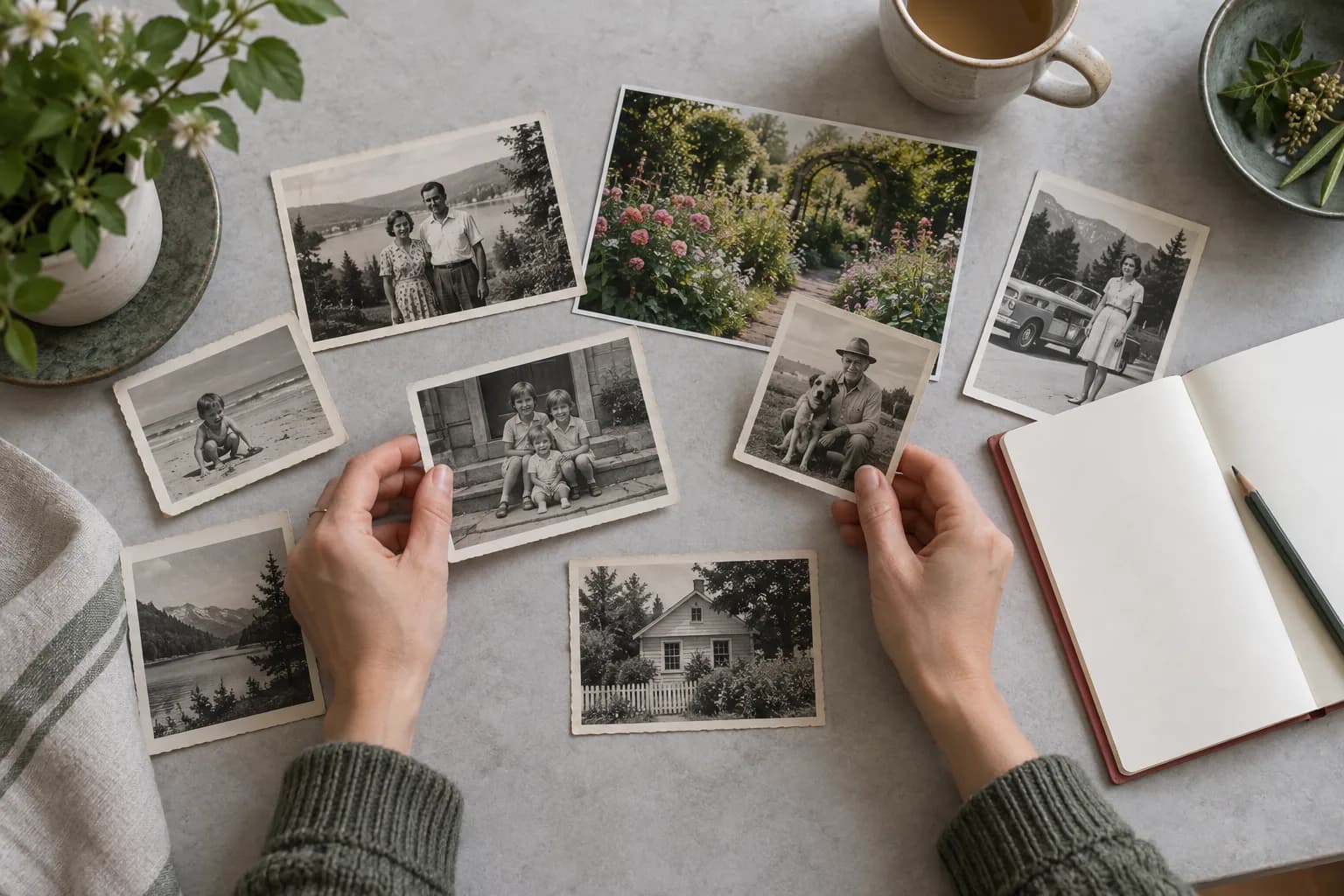
Paper, canvas and metal are not three prices for the same object. Each does something different to a photograph, and the right one depends more on the age of the picture than on the budget.
Canvas suits older and softer images. High-gloss metal suits recent photographs with strong colour. Paper suits almost everything and asks you to frame it.
Canvas
Stretched over a frame and ready to hang. The weave breaks up grain and softness, which is why it flatters an old photograph — the texture of the surface and the texture of the image agree with each other.
It reads warm and quiet. On a very sharp modern picture that same weave costs you detail you paid for, which is the argument against it rather than for it.
The image is mirrored around the edges rather than cropped into, so nothing near the border is lost to the wrap — covered in the section below on what happens at the edges.
Metal
A high-gloss aluminium panel, float-mounted so it stands slightly off the wall. Colours are harder and brighter and the surface is wipe-clean.
It suits recent photographs, strong colour and modern rooms. It does not flatter a soft scan — gloss magnifies every deficiency in a source, and a picture that looked acceptable on a screen can look thin on metal.
Note also that it is not offered at the largest size.
Paper
Gallery-grade at the smaller size, heavier museum stock at the largest. Both ship unframed, with a white border sized for a standard frame.
That is a real trade. It means choosing and buying a frame yourself, and it means the piece does not arrive ready to hang. In exchange you get the widest tolerance for imperfect sources and the option to match a room properly.
What happens at the edges of a canvas
Worth knowing before you choose it, because it is the one irreversible decision here. A stretched canvas wraps around a frame, so something has to happen to the image at the border.
The image is mirrored around the edges rather than cropped into or padded with a flat band. That means nothing near the border of your photograph is lost to the wrap — which is the safe default precisely because we cannot know how close a subject sits to the edge of any given picture.
A face very near the border is still better served by paper with a border around it. Mirroring protects the image; it does not create room that was never there.
The short version
Old and soft, ready to hang: canvas. Recent and vivid, ready to hang: metal. Old and irreplaceable, and you will frame it: paper.
Sizes and prices are on the catalogue.
MemoryFrame
Make something from the photograph that matters
Bring your photograph and its story to MemoryFrame to begin a piece of artwork.
Start your MemoryFrame