3 min read
Why the worst photograph is often the right one
The oldest and most damaged picture in a family is usually the one nobody else has seen. Here is how far a poor source can honestly be taken.
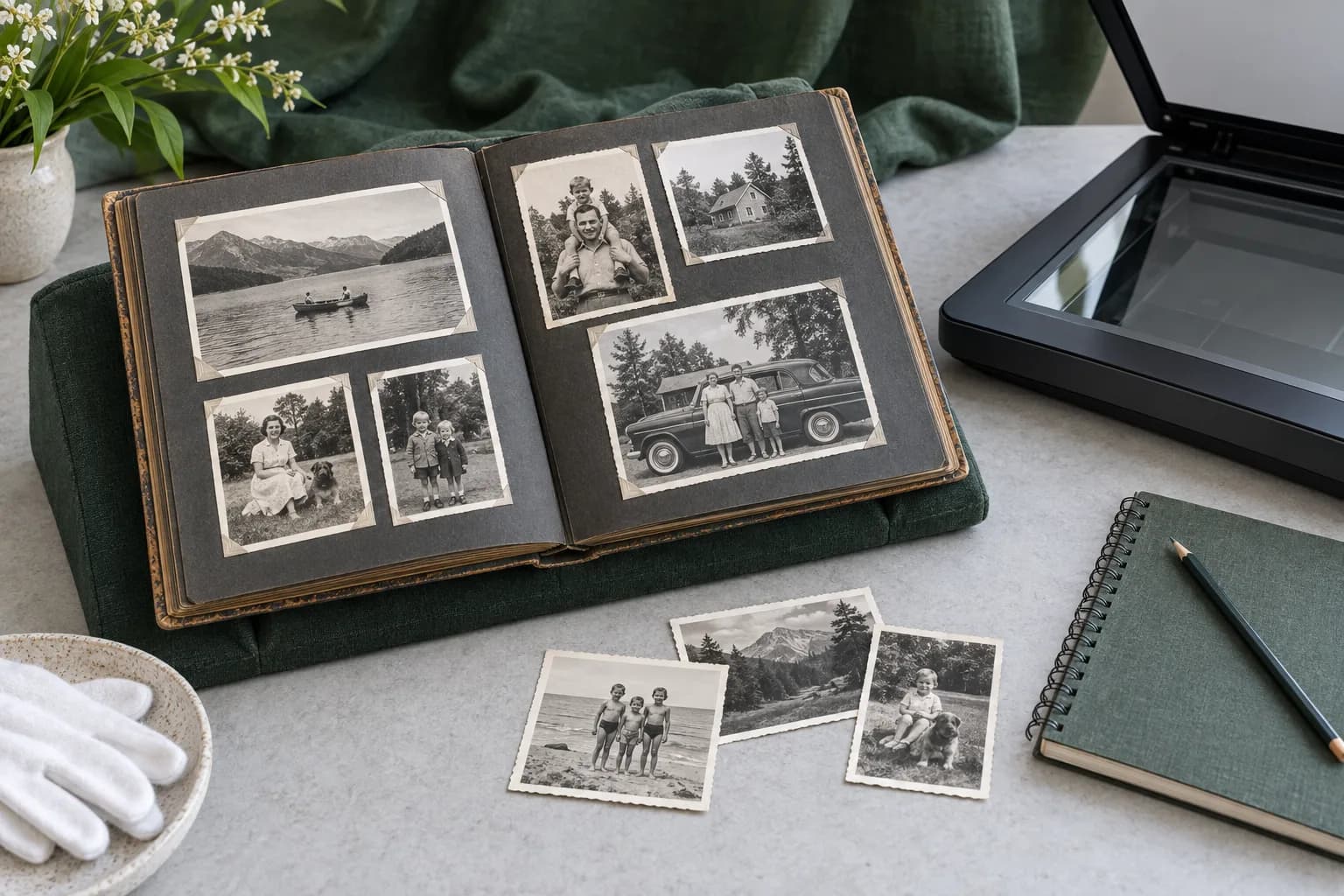
The oldest and worst photograph in a family is usually the one that matters most, and it is normally the one nobody outside that family has ever seen.
That combination is unusual. Most pictures worth printing are either good or widely held. This is the class that is neither.
Why the bad ones carry more
A photograph survives fifty years for a reason, and the reason is rarely composition. It survives because somebody kept moving it — from a wallet to a drawer to a box that got carried between three houses.
The good photographs from the same period were the ones sent to relatives, duplicated, and framed. The bad one stayed singular. So when a family finds it, it arrives without the flatness that comes from having been looked at by everyone already.
What a poor source can honestly do
Condition and size are separate questions, and the second is the one that constrains you.
A damaged 1974 snapshot — creased, faded, taken on a cheap camera — can make a good small print. Pushed to a large one, the damage becomes the subject: the grain stops reading as age and starts reading as a fault, and any process fixing that is inventing detail rather than recovering it.
Two things set the ceiling, and they are covered properly elsewhere:
- the resolution floor, below which a print stops being sharp at normal viewing distance
- the enlargement ceiling, past which upscaling predicts rather than recovers
The practical answer for most old snapshots is the smallest size, and that is not a compromise. A small print of the right photograph beats a large print of a duplicate.
Repair, but do not improve
There is a line between removing a crease and removing the years, and it is worth holding.
A restored photograph that has been smoothed, brightened and colour-corrected into something modern no longer looks like the object anybody remembers. The faithful-not-flattering principle applies with particular force to old sources: the fading is part of what the picture is now, and a version without it can read as a reproduction of something else.
Fix the damage that obscures the subject. Leave the damage that dates it.
What to ask for when collecting
If you are gathering pictures from relatives, ask explicitly for the old and bad ones. Left to themselves people send their best photograph, which is nearly always recent, well-lit, and already on three other phones.
Send me the oldest one you have, even if it is in poor condition produces an entirely different set of replies — and it is the request that surfaces the picture no one else in the family knew existed.
Classic is the size most of these end up at.
MemoryFrame
Make something from the photograph that matters
Bring your photograph and its story to MemoryFrame to begin a piece of artwork.
Start your MemoryFrame