2 min read
A memory that happened outdoors is built differently
A sea crossing or a garden has no interior to work from. It is the case most likely to go wrong, and the description has to do more work.
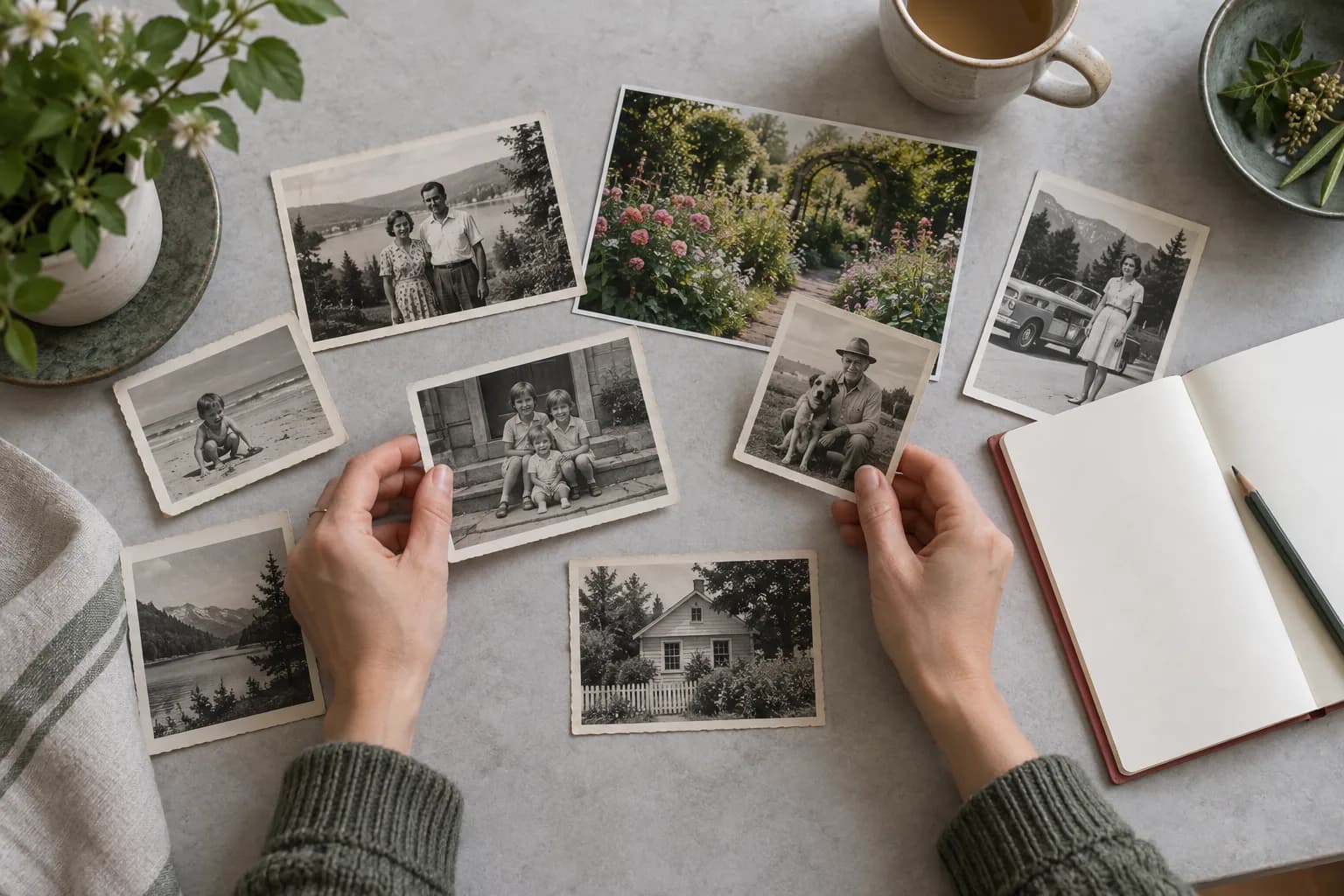
A memory set outdoors is built differently from one set in a room, because there is no interior to work from. A sea crossing, a garden, a hillside — none of them has walls, and a good deal of what makes an indoor scene cohere is the walls.
It is the case most likely to go wrong, and worth knowing about before you commission one.
The specific failure
A memory of open water that comes back looking like a domestic room is a failure rather than a style choice. It happens because the fallback for "somewhere to put this" is an interior, and an interior is the wrong answer for a photograph taken on a deck in February with nothing behind it but sea.
The same applies to a garden that returns as a pristine show garden when the memory was of somewhere warm and slightly overgrown, or a hillside that acquires a tidiness it never had.
What makes the difference
The description. Outdoor scenes depend more heavily on what you write than indoor ones do, because there is less in the frame to infer from.
The roses behind her are the ones she planted the year they moved in does more work outdoors than an equivalent sentence would in a kitchen, where the kettle and the table are already telling you where you are.
Name the season, the time of day and the weather. Those three do most of the work, and people leave all three out because the photograph "obviously" shows them — which it does to you, and not to anything else.
Open water is the hardest case
There is genuinely nothing to hold onto: no horizon furniture, no objects, no architecture. A photograph of somebody on a deck with sea behind them is almost entirely a photograph of a person, and everything else has to come from the text.
If that is your memory, write more than you think you need to.
Where this shows up
Most visibly in the room a piece appears in when somebody scans it, which is derived from the same description — covered in what does the recipient see when they scan it. The general principle is in why the small details are the whole thing.
MemoryFrame
Make something from the photograph that matters
Bring your photograph and its story to MemoryFrame to begin a piece of artwork.
Start your MemoryFrame